Showing posts with label Puddings. Show all posts

Sunday, April 07, 2013

Bananas and Greek yoghurt


Many people like to swirl honey or golden syrup into their Greek (or “Greek-style”) yoghurt. To my taste, these additions smother the acidic edge that makes the yoghurt so delicious.

Instead, I add just a sprinkling of caster sugar. For a quick pudding, I use for each sliced banana 3tbsps of yoghurt and half a tsp of sugar.

Saturday, February 23, 2013

Syrup sponge


This Hugh Fearnley-Whittingstall recipe for syrup sponge works just as well with gluten-free flour (I used Doves self-raising). Being someone who likes to add as much flavour to a dish as possible, even at the risk of overloading it, I also included the zest of a lemon and a teaspoon of vanilla extract.

I greased my pudding bowl with a little oil, rather than butter. But the sponge still got stuck in places, as you can see.

I wrapped the bowl in kitchen paper, and then in three layers of foil – first placing the foil on the top and wrapping, then repeating the process from the bottom, then returning to the top. I did not need string. I placed the wrapped bowl in a steaming basket inside a large saucepan.

Like the wheat flour version, this steamed pudding turns to stodge when kept. It’s not unpleasant, but quite unlike the fluffy concoction that emerges hot from the bowl.

Saturday, January 26, 2013

Rhubarb with ginger sponge

The rhubarb from last week is delicious under a ginger sponge. This recipe is adapted from Margaret Costa’s Four Seasons Cookery Book, the principal differences being the pre-cooking of the rhubarb, so that the dish is not too runny; the use of self-raising flour (Doves gluten-free) rather than plain flour and baking powder; and the halving of the quantities. Two of us, taking second helpings, ate all of it; it would comfortably serve 3, and possibly 4.

3 or 4 sticks rhubarb, cut into spoon-sized pieces
1tbsp golden syrup
1/2 cinnamon stick
85g self-raising flour
1tsp ground ginger
1/4tsp mixed spice
Grating of nutmeg
Pinch of salt
57g butter
27g brown sugar
1 egg, beaten


Cook the rhubarb as in last week’s recipe. Drain the liquid into a small saucepan, put the pan over a medium heat on the hob, and boil until the liquid becomes syrupy. (Careful: it will stick and burn if you leave it too long.) Pour it back over the rhubarb.

Stir the spices and salt into the flour. Cream the butter and sugar; because of the high ratio of butter to sugar, you may be able to do this by hand. Beat in the egg, and fold in the spiced flour. If the batter is too thick, loosen it with a little milk until it attains a dropping consistency.

Spread the batter over the rhubarb, and bake in a gas mark 5/190C oven for about 40 minutes, or until the sponge is risen and golden.

Serve with custard, cream, or ice cream.

Saturday, January 19, 2013

Baked rhubarb with golden syrup

A happy discovery this lunchtime was that golden syrup – I had some left over from my gingerbread recipe – goes very well with rhubarb. Lovely, vibrant pink forced rhubarb is in the shops now.

Serves 2.

2 to 3 sticks rhubarb, cut into spoon-sized pieces
1tbsp golden syrup
1/2 cinnamon stick


Put the ingredients into an oven dish, and bake for 30 minutes at gas mark 6/200C, stirring from time to time.

Saturday, August 25, 2012

Armenian rice pudding

This is a delicious and easy pudding, adapted from Arto der Haroutunian’s Middle Eastern Cookery (Grub Street). It is traditionally served to visitors on the birth of a son, he tells us. "When I asked my mother what people served on the birth of a daughter, she gesticulated with her hands, shrugged her shoulders and said: 'Oh, a glass of orangeade or something like that.'"

I used raisins rather than the sultanas in the recipe, and pine kernels rather than split almonds, which some members of my family do not like.

75g pudding rice
1 pint milk
Peel of 1 lemon
100g raisins
100g caster sugar
2tbsp (yes, really) vanilla essence
50g pine kernels, toasted in a small saucepan over a very gentle heat


Bring a pan of water to the boil, throw in the rice, bring the water back to the boil, and drain. You’re getting rid of some of the surface starch and dust.

Put the drained rice into a heavy saucepan with the milk and the lemon peel. (I managed to peel my lemon in about five vertical strips.) Bring slowly to the boil, and simmer gently, uncovered, until the rice is tender and the milk is absorbed – by this, I took Haroutunian to mean that you want a consistency like that of a thickly soupy risotto. Stir in the raisins and simmer for a few more minutes. (I soaked the raisins first in boiling water, perhaps unnecessarily.)

Remove from the heat, and stir in the sugar, vanilla, and pine kernels. Chill.

Remove the lemon peel before serving, and loosen with a little milk or cream if you like.

These quantities will provide about six modest portions.

Tuesday, August 07, 2012

Plum tart 2

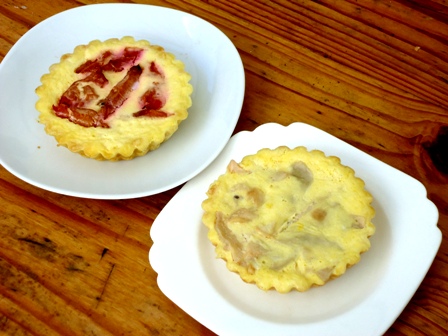
With the addition of a dessert spoonful of sugar and a few drops of vanilla, and with the cheese omitted, the savoury custard in my previous post became a filling for this plum tart.

The pastry included 150g flour; 75g of butter, cubed and rubbed in; another dessert spoonful of sugar, stirred in; and a few teaspoons of water to bind it. As usual, lacking the skill and patience for pastry-rolling, I shoved the dough into the lightly greased (with sunflower oil) tin, and worked it into place by hand.

I baked the pastry blind for about 20 minutes at gas 6/200C, until it was firm. (I took a risk in not weighing it down with foil topped by baking beans; it didn’t buckle.) I spread halved and pitted plums over the surface, scattered sugar over them, poured the sweetened custard on top, and baked the tart at gas mark 3/170C for 30 minutes.

I don’t believe the pastry would have improved with rolling. It was crisp and buttery.

This was much simpler, and just as good, as the tart in the recipe below. Also, I no longer include salt in the pastry mix, believing that it encourages the development of gluten.

Sunday, May 27, 2012

Katherine Hepburn's chocolate brownies


Yes, this recipe is ascribed to THE Katherine Hepburn, the one who, as pub quiz enthusiasts may know, won a record four Best Actress Oscars. At first sight, it appears to have far too little chocolate, and a surprisingly modest amount of flour. But it produces delicious, fudgy results, albeit - as you can see - somewhat crumbly ones.

The espresso that I included features in only one online version, and may not be canonical.

50g dark chocolate (70% cocoa or more)
120g butter
200g sugar (I used caster; some recipes specify granulated)
1tsp vanilla essence
2tbsp brewed espresso coffee
2 eggs, beaten
45g plain flour
Pinch of salt
Handful of chopped walnuts (optional)


In a small saucepan, melt the chocolate and butter over a very gentle heat, stirring all the time. Take the pan off the heat as soon as you think the mixture is hot enough to melt any remaining solids.

Pour the chocolate mixture over the sugar in a bowl, and stir, adding the vanilla and espresso. Stir in the eggs, flour, salt, and walnuts, if using. (I am not sure why you need the salt. It does promote the development of gluten, so may help the brownies to cohere – but perhaps not in this small amount.)

You’re supposed to bake the mixture (at 170C), which is almost alarmingly runny, in a lined (with greaseproof paper), 8” (20cm), square tin. I had only a round, 23cm tin, and my brownies were too thin. They took about 40 minutes.

Bee Wilson: Please, less chocolate in my brownies! (Telegraph)

Saturday, February 18, 2012

Ricotta pudding

This recipe is adapted from one in Claudia Roden's The Food of Italy (she says it's from Sardinia), the main differences being that I had a 225g packet of ricotta rather than the 300g she specifies, and that I thought that 300g of honey was twice as much as I wanted.

My flan dish (22cm) may be larger than the one she uses (she doesn't give a measurement), because my pudding was ready in 30 minutes rather than the 45 she suggests.

225g ricotta
100g ground almonds
150g honey
3 eggs
Juice of one orange


Mix all the ingredients. Or, for a smoother result, put the ricotta through the blender, then add the rest of the ingredients.

Lightly oil a flan dish. Pour in the ricotta mixture, and bake at gas mark 6/200C for 30 minutes, or until golden and firm.

Cakes and puddings made with ground almonds can be somewhat dry. This is deliciously moist, with a sweet tang.

Saturday, September 10, 2011

Greengage sponge

Figuring that a sponge pudding is simply a sponge cake, steamed rather than baked, I made this slightly raggedy but deliciously gungy effort according to the classic sponge recipe: in imperial measurements, four ounces each of butter, sugar, and flour, and two eggs. What worried me was the liquid from the greengages. But my batter was pretty stiff, and the greengages imparted the stickiness that you want in a pudding of this kind.

I realise that greengages are over now. You could use other kinds of plums, such as Victorias or damsons.

Serves 4.

115g butter
115g caster sugar
2 eggs
115g self-raising flour
1tsp vanilla essence
12 greengages (mine were small), halved and stoned

Cream the butter and sugar. I do this in a food processor: the mixture turns pale, then coheres into a ball, and then smears itself on the sides of the bowl. I stop at this point, and scrape it into a mixing bowl.

I cleaned the food processor bowl, fixed the whisk attachment, and whisked the eggs for about five minutes, until they had doubled in volume and were airy. Whether this effort to introduce more air to the sponge was worthwhile, I do not know. It is possible that the air bubbles collapse as soon as you stir the eggs with the other ingredients.

Pour the eggs into the creamed butter and sugar, tip in the flour, add the vanilla, and stir until you have a thick batter with no lumps. Gently stir in the greengage halves.

Grease a 1 pint pudding bowl with a little sunflower oil. Pour in the batter. Wrap the bowl in greaseproof paper, and then in three layers of foil.

Put the bowl into a saucepan. Pour in boiling water to come half way up the sides. Cover the pan, and simmer over a gentle heat for one hour.

Friday, August 19, 2011

Normandy apple tart

750g apples (sweet apples with a tart quality, such as Cox's, are good; but even the dreaded Golden Delicious, provided their textures are not too mealy, would be fine)
Juice of 1 lemon
60g butter
4tbsps caster sugar

120g flour
60g butter
1dstsp caster sugar
Cold water


While in France, I cooked a good deal from Elizabeth David's French Provincial Cooking; but I sometimes had to adapt the recipes and techniques. For instance, she suggests that to cook apples in butter, you might put 2lbs (about 900g) of apples, sliced, into a large frying pan with 2oz (57g) of butter and three or four tbsps of caster sugar. This would be quite difficult to manage, because the apples would form several layers and would need to be stirred, under which treatment they might well break up. Though disliking fiddly operations, I cooked them in two batches.

Peel and slice the apples, and as you work toss them in the lemon juice in a bowl, to prevent discolouration. Melt 15g of the butter in a large frying pan over a gentle heat, and pack in a layer of apples. Scatter a tbsp of sugar over them. Cook them for about five minutes, turning once. They should be tender to the point of a knife, but not too soft to hold their shape. Repeat the process.

If, like me in France, you do not have a food processor, or if you prefer not to use one, grate the butter into the flour. Rub it in. Stir in the sugar. Add a tbsp of water, and bring the mixture together; gradually add more water until you have just enough to enable the dough to cohere.

Now, as David recommends, spread the dough by hand in your tart tin - mine was 28cms, and lightly oiled. At first, you may think you do not have enough, but you should find that it spreads out satisfactorily. Patch up any holes as you go.

Place a baking sheet in the oven, and pre-heat it to gas mark 6/200C.

You do not blind bake this pastry. Working outwards from the centre, arrange the apple slices in overlapping rings in the tart case. Place the tin on the baking sheet, and cook for about 30 minutes.

Melt the remaining 30g of butter in the frying pan, and pour it over the apples. Scatter the remaining sugar on top. Return the tart to the oven for about 3 minutes, or until golden.

Wednesday, August 10, 2011

Fruit tarts

I made three of these tarts, in 10cm tins. Obviously, the ingredients may be expanded proportionately to make any number of individual tarts, or a larger one. However, this is what I did, with the quantities I had.

100g flour
50g butter
1dstsp caster sugar
Cold water
1 medium apple
2 Victoria plums
Caster sugar
1 egg, beaten
75ml creme fraiche
75ml milk
1tsp vanilla essence


Grate the butter into the flour, as rapidly as possible, so that it does not go squidgy in your hand. You should now be able to rub it in - or blend it in a food processor - in no time at all. Stir in the sugar. Add a little water, and bring the mixture together; keep adding water sparingly until you are able to form a dough. (I added too much to mine, with the result that the pastry was slightly stodgier - more glutenous - than it should have been.)

If you gently bring the dough together, it may fall apart when you try to roll it. If you knead it for a minute or two, it will be more coherent, but may be tougher as a result of the gluten that has developed. I didn't roll my pastry, because I tend to make a mess of the procedure, but got out the grater again and grated the dough into the tins. Then I spread it over the bases and up the sides with my fingers. (Experts recommend that before rolling you chill the dough, wrapped in cling film, for 30 minutes or longer.)

Put the pastry-lined tins on a baking sheet (which helps the bases to firm up) and bake for about 20 minutes, or until dry and golden. You might cover the dough with foil, weighed down with an ingredient such as rice or dried beans, for 15 of the 20 minutes, to stop it from buckling as the water content evaporates.

Peel the apple, quarter and core it, and slice it thinly. Quickly, before it discolours, transfer it to a heavy pan in which a small knob of butter is starting to sizzle over a gentle heat. Turn the slices to coat them in butter, and cook them gently until tender. Place the slices in one of the pastry-lined tins.

Halve the plums, stone them, and slice them. Put them into the two other pastry cases. Scatter a little sugar over the fruit.

Mix together the egg, creme fraiche, milk, and vanilla essence until smooth. (Use double cream if you can find only factory-made creme fraiche, which always splits, in my experience.) Spoon the custard mixture over the fruit in the tins. I didn't need all of it.

Bake the tarts, again on the baking sheet, at gas mark 3/160C for 20-30 minutes, or until the custard is set.

Sunday, July 24, 2011

Greengage and blackberry fool


A very simple pudding. You use roughly the same quantity of cream as of fruit compote. The amount of sugar you need will vary according to the kind of fruit (or, in the case of rhubarb, vegetable). This fool includes about 20 greengages, two small punnets of blackberries, 2tbsps of caster sugar, 400ml of double cream, and 1tsp of vanilla essence.

Put about 50ml of water into a heavy saucepan, and throw in the greengages and blackberries with the sugar. Cover, bring to a simmer, and cook gently, stirring from time to time, until the fruit is very soft - no more than 15 minutes, probably. Force the compote through a sieve into another saucepan, pushing and stirring the fruit with a spoon.

Bring the sieved compote to a simmer again, and cook until it is lava-like in consistency, with big bubbles breaking the surface. Test for sweetness. Pour the compote into a bowl, and allow to cool. (It will thin the cream if it is hot.)

Whip the cream, with the vanilla if using, and stop as soon as it stiffens. (If you keep beating, it will become almost solid, and grainy too.)

Blend the cream and the compote, and chill for a couple of hours.

Saturday, July 09, 2011

Chocolate cheesecake

150g digestive biscuits
75g butter
3tsp gelatine*
500g ricotta or cottage cheese (drain the cottage cheese)
1 397g tin condensed milk (about 300ml)
200ml double cream, whipped until slightly thickened
100g dark chocolate

Rub a tiny bit of oil over a 20cm flan dish, or line and grease a 20cm springform cake tin (see here).

I whizzed the biscuits in a food processor, cut the butter into pieces, threw them in, and whizzed again until all the crumbs were buttery. But this base did not have the crunchiness I like. So my advice is to melt the butter in a saucepan over a very gentle heat, remove the pan from the heat, tip in the biscuit crumbs, and mix thoroughly with a spoon. Tip the crumbs into the dish or tin, and compact them with the back of a spoon. Put the dish or tin into the freezer to firm up.

Put about 4tbsp of cold water into a small saucepan. Sprinkle over the gelatine, and swirl the water about until the powder is thoroughly soaked. Set aside.

In a bowl, stir together the ricotta, condensed milk, and cream until thoroughly blended. (You may prefer to use 500ml cream alone, without the condensed milk. In which case, throw in 60g caster sugar too.)

Place a bowl in a saucepan of gently simmering water so that the base of the bowl does not touch the water. Break up the chocolate, throw it in, and stir until melted. Remove from the heat.

Add a few spoonfuls of the cheese and cream mixture to the chocolate - stirring them together will help to release the chocolate from the side of the bowl. Tip this mixture into the bowl of cheese and cream, and blend.

Put the saucepan with the gelatine on to the lowest possible flame, and stir. As soon as the powder dissolves and the mixture clarifies, remove it from the heat. (Boiling gelatine disables its setting qualities.) Keep stirring until thoroughly dissolved. Pour the gelatine into the cheese mixture, and blend thoroughly.

Remove the biscuit base from the freezer, and pour over the cheese mixture, levelling it with a knife. Cover the dish or tin with foil (create a tent above the filling if you're using a flan dish), and refrigerate for at least three hours.

This cheesecake is based loosely on one in CLASSIC CHEESE COOKERY by Peter Graham (Grub Street). Graham also includes 3 limes, creme de menthe, and mint leaves; his cheesecake contains a hefty 280g of chocolate. The disadvantage of my quantity is that the pale brown of the filling is not particularly attractive. But 280g would be a bit much, I think. You could leave out the chocolate altogether, and just have lime juice (and zest), or lemon, or a combination of the two. Three fruit in total, I think.

*Graham's recipe has 20g of gelatine, which is far more than I used, or needed, or would have needed even had I included the lime juice. Different gelatines (and particularly different leaf gelatines) have different strengths. Check the recommended quantities on the packet. If you use leaf gelatine (three leaves may be the equivalent of 3tsp), you can prepare it in the same way: soaking, and then warming very gently.

Saturday, June 04, 2011

Lemon mousse

This mousse is gorgeous. It has a delicious balance of citric acidity and sweetness, as well as a lovely, foamy texture. The trick - not one about which recipes are very helpful - is to blend the gelatinous mixture and the egg white at the right moment. Do it too soon, and the mixture separates and sinks; too late, and the mixture is too well set to be blended.

It is another recipe, following last week's cheesecake, from Reader's Digest's CLASSIC FAVOURITES. The RD version has an extra 125ml of cream, which you're supposed to pipe on top, as well as flaked almonds.

2tsp gelatine
2tbsp water
3 eggs, separated
150g caster sugar
2 lemons, juice and grated rind
125ml double cream


Put the gelatine and water into a small saucepan, and leave to soak for 10 minutes. Meanwhile, combine the egg yolks and sugar in a bowl, and beat them with a wooden spoon until they turn pale yellow. Beat in the lemon juice and rind.

Put the saucepan on to a ring on the hob at its lowest setting. The gelatine mixture may seem thick, but will quickly turn watery. Stir it until all the gelatine has dissolved, and do not allow the mixture to boil - overheating disables its thickening qualities. Add it to the egg and lemon mixture, stirring gently but thoroughly.

You leave this mixture until it starts to set. How long is this? RD does not say. I put mine in the fridge; after just over an hour, it still swirled around as I shifted the bowl, but was no longer runny. I decided that this was the moment. I turned out to be lucky.

Whisk the cream until it thickens, but stop before it becomes stiff – the transition is rapid, so take care. In a separate bowl, and with a separate – or at least clean – whisk, beat the egg whites until they form soft peaks (advice here).). Fold in to the whites the cream and the egg yolk mixture, which should have the consistency of a collapsing jelly. Again, perform the action gently, but do so until the mousse is thoroughly blended.

Spoon the mousse into a bowl, cover with cling film, and refrigerate for at least six hours.

Saturday, May 28, 2011

New York cheesecake

I have an amazingly useful Reader's Digest book called CLASSIC FAVOURITES. I say "amazingly" because the book is where I go for every classic recipe, yet appears to be only a slim hardback, at 200 pages.

Finding the recipe and having the ingredients to hand are different matters. So I had to substitute certain ingredients in this New York cheesecake (which the book calls "American cheesecake"). I've marked the heretical ingredients with asterisks, and commented on the RD version below. My method is slightly different, too.

Crust
150g digestive biscuits
50g butter*

Filling
300g ricotta
200g cream cheese**
125g caster sugar
2 eggs, separated
125ml double cream***
2tbsp flour
1tsp vanilla essence
1tsp grated lemon rind (the rind from 1 lemon, roughly)


Blitz the biscuits in a food processor. Melt the butter in a saucepan over a very low heat, and mix in the digestive crumbs.

Spread a little butter on the base of a 24cm cake tin, and place a circle of greaseproof paper on top. (Draw a ring on the paper round the base, and cut along it.) Tip in the crumbs, spread them out, and compact them with the back of a spoon. Put the tin in the fridge for a couple of hours, RD says; I put mine in the freezer.

Blend the cheeses. Beat in the sugar and egg yolks. Stir in the cream (I whipped mine first, until it had started to thicken), flour, vanilla essence and lemon rind. Beat with a wooden spoon until the mixture is smooth. Whisk the egg whites until stiff but not dry (advice here), and fold them gently into the mixture. Pour the mixture on to the crust in the cake tin. Spread smooth.

Put the tin on to a baking sheet (an aid to even heat transmission, some books say), and bake in the centre of a gas mark 4/180C oven for one hour. My cheesecake took an hour and 10 minutes, by which time it was only very slightly wobbly in the centre.

Allow the cake to cool (the picture shows it still in its tin). Then chill it in the fridge. When it's properly chilled, release it from the tin.

The RD cheesecake has a very sweet topping, made from black cherries in syrup, cornflour, lemon juice, and caster sugar. Not my thing.

* RD suggests 200g digestives, so you have enough crumb to spread up the sides of the tin. I'd be likely to make a mess of that job. I've left out the 2tbsp of caster sugar that the book includes in the crumb mix. It suggests 100g butter; but I've come to think that a ratio of 1/3 butter to digestives works fine.

** The recipe has 250g cottage cheese and 250g cream cheese; or 500g cream cheese. Cottage cheese might give a lighter filling.

*** I was disappointed not to have sour cream. I would definitely use that (or creme fraiche) next time.

Saturday, March 26, 2011

Rhubarb sponge

The forced rhubarb that you can still get at the moment is good for crumbles and sponges, because it is tender enough not to require pre-cooking. As you can see, it gives off quite a bit of liquid - but not too much.

The recipe is based on one in a kitchen favourite of mine (and of many others), Margaret Costa's Four Seasons Cookery Book.

450g rhubarb, washed and cut into pieces
55g soft brown sugar
55g butter
55g caster sugar
Rind of 1 orange
1 egg, beaten
85g plain flour


Place the rhubarb in an oven dish, and scatter the sugar on top.

Cream the butter with the caster sugar until soft and pale. Stir in the egg and the flour. (I used gluten-free flour, which gets particularly thick and sticky: I added the best part of a further egg.)

Spread the sponge mixture over the rhubarb. Bake at gas mark 5/190C for about 40 minutes, until the sponge has risen and browned.

Saturday, February 19, 2011

Key lime pie 2

A return to a favourite theme of this blog: the creamy pie with a biscuit base. (See here, here, and here.) This one is adapted from a recipe in Nigella Lawson's KITCHEN. Hers has twice as many (ordinary) digestives, with 50g chocolate chips. You'd be able to use a better class of chocolate that way than you'd get from my chocolate digestives.

Nigella uses only 50g of butter to 300g of biscuits, while I have always believed that a higher ratio of butter gives you a firmer base. And she whizzes up the butter with the biscuits and chocolate: I had never thought of doing that, always stirring the crumbs into butter melted in a pan. The drawback of her method is that the mixture resolves itself into a ball in the food processor, rather as flour and fat do when you add a little water. It is a bit of an effort to spread it out in the dish.

150g chocolate digestives (I used gluten-free)
1tsp cocoa powder
75g unsalted butter, cut into pieces
1 397g can condensed milk
3 limes, juiced and zested
284ml double cream


Whizz the biscuits with the cocoa powder and butter in a food processor.

Grease a 20cm flan dish or a springform tin. Tip in the biscuit mixture, spread it out, compact it with the back of a spoon, and put the dish or tin into the freezer for 30 minutes, to firm up the crumbs.

Pour the condensed milk into a bowl. Stir in the lime juice and zest, and pour in the cream. Whisk. With a hand whisk, this is quite hard work. The mixture does not go stiff, but it does, eventually, thicken. Pour this filling on top of the biscuit base.

Cover the dish with foil, tented at the top so that it does not stick to the filling, and refrigerate for at least three hours, or overnight.

This pie has an ideal combination of crunchy base and creamy, but light and tangy, filling.

Saturday, January 01, 2011

Chocolate mousse, without graininess

This was the best chocolate mousse I have ever made: richly frothy in texture, and without the graininess that has marred my efforts in the past. I think the key was that the chocolate mixture was properly cool before I added the egg yolks.

The ingredients produced enough mousse to fill seven ramekins.

150g dark chocolate (I used Green & Black's cook's chocolate)
25g butter, cut into small cubes
6 eggs, separated


Break the chocolate into its squares, and melt it in a bowl held above a pan of simmering water. (I have a Pyrex bowl that rests on the edges of a saucepan.) Stir the chocolate to encourage melting, and remove it from the heat as soon as, or slightly before, all the lumps have disappeared. Drop in the butter.

Beat the egg whites, just on their own and with no salt or acid (see this post), until they form soft peaks. Take about a quarter of the white and beat it into the chocolate and butter. The mixture should retain the texture and consistency of thick chocolate sauce. Now stir in the yolks.

Pour the chocolate mixture over the egg whites. Fold it in, using a lifting and turning motion with the spoon until amalgamated. Transfer to a dish, or to individual ramekins, and refrigerate for at least three hours.

Sunday, October 10, 2010

Plum crumble

You do not need to pre-cook the plums in a plum crumble. Sprinkling them with sugar about an hour before you add the topping will help to soften them; and you could cook them in the oven for longer, at a lower heat, than you would a crumble with pre-cooked fruit. The plums I used were similar to Victorias, but larger.

Two of us ate the crumble in the picture. It would have served three.

12 plums, halved and stoned (not a job that you can carry out with precision - I used a small knife to work round the stone and prise it out)
2tsp caster sugar
75g plain flour
40g unsalted butter, cut into small pieces
1tbsp brown sugar


Lay the plums snugly in an oven dish, cut sides up. Sprinkle them with sugar, and set aside for a while.

Work the butter into the flour with your finger tips. (It's not worth getting out a food processor for this job. You can do it very quickly by hand, because you don't have to keep rubbing until every bit of butter has disappeared.) Stir in the sugar.

Tip the crumble mixture over the plums, and bake at gas mark 4/180C for about 40 minutes.

Sunday, May 09, 2010

Rhubarb, orange and cinnamon

Unless you want to make a compote or a fool, you may prefer to bake rhubarb rather than to stew it on the hob - the pieces will not break down and turn to mush. Serves 2.

4 sticks rhubarb
1 orange
Cinnamon stick, or sprinkling of ground cinnamon

2 heaped dstsp dark brown sugar

Cut the rhubarb into spoon-sized chunks. Give them a wash, and put them in an oven dish. Squeeze over the juice of the orange, and throw in the orange husks. Add the cinnamon. Bake at gas mark 8/230C for about 10 minutes.

Now stir in the sugar, which might have caught and burned if you had added it before the rhubarb threw off any liquid.

Bake for a further 20-30 minutes, until the rhubarb is very soft.

There will be too much liquid. Spoon it into a small saucepan, and boil it until syrupy. Pour it back over the rhubarb. Serve hot or warm (but cold would be fine too), with cream or yoghurt.